Saturday, June 9, 2012

MAY LABAN NGA BA SI GREGORIO DEL PILAR?


May laban ba si Gregorio del Pilar? Meron ba talagang labanang magaganap na sasalihan ni Gregorio o may laban nga ba talaga siya kumpara sa kanyang mga kaaway?

Nagagalak akong ipakilala sa inyo ang kaisa-isang barkong pandigma ng Pilipinas na pinangalanang Gregorio del Pilar na inangkat pa mula sa Amerika. Siguro nga ay dapat nga namang ipagmalaki itong ating tagapagtanggol sapagkat si Gregorio ay isang beteranong mandirigma na nagmula pa noong Ikalawang Digmaang Pandaigdig. Subalit ang aking pakay ay hindi ipagsigawan ang kakayanan ni Gregorio na ipagtanggol ang Pilipinas kundi ang nakaambang mga kalaban ni Gregorio na kapwa mga malalaking pandigmang sasakyang pandagat ng Tsina.

Ang pag-iisa ni Gregorio ay naghuhudyat ng kahinaan laban sa pinagsamang pwersa ng mga sasakyang pandigma ng Tsina. At ang anggulo ng kahinaan ay nagbibigay daan sa nakaambang gulo. 

Huangyan Island sa salita ng mga Intsik, Scarborough Shoal sa Ingles, at Panatag Shoal sa mga Pilipino, ito ang mainit na pinagaawayan ng Tsina at Pilipinas na umaasang maipaglalaban ni Gregorio.

Ang pagkakalabuan ng Tsina at Pilipinas ay tila baga laban ni David at Goliath. Ang Pilipinas bilang maliit na bansang walang panlaban ay may kapangyarihang angat kaysa sa malaking bansang Tsina. Ang pagkakaibigan ng Amerika at Pilipinas ay nagbibigay ng karagdagang pangamba sa Tsina na lusubin ang maliit na kapitbahay nito sa Timog Silangang Asya. Isang malaking pangamba ay ang  maliwanag na pahayag ni Barack Obama kay Noynoy Aquino nitong ika 9 ng Hunyo na tutulungan nito ang Pilipinas o ang mismong ASEAN sa pagbuo ng agreement sa Tsina tungkol sa “Code of Conduct in the South China Sea”, bilang ito’y gagamitin sa pagsasa-ayos ng mga hidwaan sa rehiyon.

Kung dadaanin sa simpleng legal na bagay, mas papaboran pa din naman ng maraming bansa ang ipinaglalaban ng Pilipinas na Scarborough Shoal bilang may 200-nautical-mile Exclusive Economic Zone (EEZ) kumpara sa umaabot na ilang daang milya ang layo mula sa mismong kalupaan ng Tsina. 

Bilang karagdagan, ang Pilipinas mismo ay nabibigyan ng pabor dito sa International Law tungkol sa mga hidwaan sa teritoryo katulad ng sa Scarborough. Ito mismo ay alinsunod sa kaso ng “isla ng Palmas” na matatagpuan sa katimugang bahagi ng bansa. Ang isla ng Palmas ay napag-aagawan ng Netherland na dating sumakop sa Indonesia laban sa Amerika na sumakop sa Pilipinas pagkatapos matupad ang Treaty of Paris o ang pagbenta ng Espanya sa bansa sa mga Amerikano. Naging mainit din ang agawan sa islang ito. Sa napagkasunduan, nabigay ang Palmas Island sa Netherlands. Sa kasalukuyan, ang isla na ito ay nasa hilaga ng Indonesia. Ayon sa hatol, kahit mas malapit ang Palmas sa Pilipinas, hindi mismo nagkainteres ang Espanya sa islang ito habang hawak pala nila ang Pilipinas na siyang nagpatalo sa Amerika sa laban. Kung kaya’t ang Netherlands na mas nagpapakita ng soberanya sa isla ang nanaig. Naging kilala at basehan ang “Palmas Island case” pagdating sa mga hidwaan sa teritoryo. Kung sa gayon, pagmamay-ari ng bansa ang Scarborough Shoal kung i-base sa “Palmas Island Case” sapagkat noong 2010, isinali ng bayan ng Masinloc, Zambales ang Panatag Shoal bilang sakop ng kanilang munisipyo.

Nitong taon lang din, na-aproba ng UN ang pag-angkin ng Pilipinas sa isang “undersea landmass” na tinatawag na “Benham Rise” na matatagpuan sa Karagatang Pasipiko. Hitik sa mineral ang naturang “undersea landmass” ayon kay Energy Secretary, Ramon Paje. Ang lugar na ito ay unti-unting umaangat na pinaniniwalaang maapakan na ng mga Pilipino ilang milyong taon mula ngayon.

Batay sa ganitong tagumpay ng Pilipinas mula sa pag-aproba ng UN sa Benham Rise nitong 2012, sa simpleng legal na usapang mas malapit ang Panatag Shoal sa Pilipinas, sa pagbibigay hatol ng hidwaan sa teritoryo na nakabatay sa kaso sa Isla ng Palmas (na lumalabas na pabor sa Pilipinas), at sa pahayag na suporta ng Estados Unidos sa bansa tungkol sa Scarborough na inilapag ni Pnoy sa White House nitong ika-9 ng Hunyo ay nagmistulang malakas at malaki ang Pilipinas laban sa Tsina. Dito ay mas naging katakot-takot ang porma ni Gregorio del Pilar.

Walang interes ang Tsina na isumite ang isyung ito sa United Nations Convention on the Law of the Seas (UNCLOS). Kahit na sa panahon pa ni Estrada ay isinumite niya ang gusot na ito sa UNCLOS bilang maging subject sa mga angkop na batas. Sa International Law, walang aksyon na magaganap kung isang bansa lamang ang nagsumite ng consent nito sa international body. 

Sa kasalukuyan, bilang stratehiya ng Tsina na maging mahina ang ekonomiya ng bansa ay itinigil nito ang pag-angkat ng mga saging sa Pilipinas. Subalit hindi ito dapat ipangamba, ang pagtaas ng 6.4 porsiyento ng ating Gross National Product nitong unang kwarter ng 2012 na pinakamataas sa buong Timog Silangang Asya at pumapangalawa sa Tsina (na may 8.1%) kung isali sa ranking ang Silangang Asya. Ito ay magiging panlaban natin sa matagal nang pagmamaliit ng Tsina sa bansa.

Kahit na masasabi nating magiging matagumpay ang Pilipinas sa labang ito, magiging galit man ang Tsina sa anumang bansa, ay walang giyerang magaganap. Lumipas na ang isang dekada mula ng matapos ang Ikalawang Digmaang Pandaigdig ay hindi na ito nasundan dahil sa iniiwasang malaking gastos. Hindi ko inaakalang maging katotohanan ang Ikatlong Digmaang Pandaigdig na pamamagatang “China vs. Philippines and friends”. Hanggang bullying lamang ang makakaya ng Tsina at hindi ko sila makikitang magsasayang ng napakalaking pera sa kabila ng gustong maging world superpower. Hindi man nila ito lantarang ipinapahayag ay makikita ang kanilang intensyon na agawin ang titulo ng 21st century na nasa US supremacy. Malaki na ang impluwensiya ng Tsina sa Africa na siyang 3rd largest training partner ng kontinente at unti-unting kinakabig naman ng Tsina ang Europa na naghihikahos sa eurocrisis. 

Anupaman, ipinagmamalaki ko si Gregorio del Pilar. Kahit na nakatambay lamang siya at naghihinitay sa mga kapwa Amerikanong barkong pandigma ay masasabing naitagumpay parin niya ang laban! Hephep! Hurray! :D


sources:
The Diplomat: Manila takes on the Goliath
related articles in Philippines Daily Inquirer
related articles in Philippine Star
Forum on China-Africa Cooperation
web.achive.org. (The Island of Palmas)
www.gov.ph (Statement on Presidents meeting with Obama)
betterphils.blogspot.com
haguejusticeportal.net (on Island of Palmas Case)


Sunday, June 3, 2012

ANG BAGONG KABANATA SA PULITIKA NG PILIPINAS

Naging makasaysayan ang naturang hatol ng senado sa kaso ng ating dating Punong Mahistrado na si Renato Corona noong ika-29 ng Mayo, taong 2012. Ang limang buwang masining na pakikipagtalastasan na masusubaybayan natin sa medya ay umani ng malakas na atensyon sa sambayanang Pilipino. Matagal na tayong ginambala ng isyung ito. Dahil dito’y di natin maipagkakaila na naging matunog ang kaso ni Corona sa kapwa nating mga mag-aaral, mga magsasaka, mga drayber na nagpapahinga sa lilim ng punong kahoy, at pati na rin sa mga tambay.

Sa mga panahong ito ay mas nakilala natin ang ating mga hinalal na senador kung paano nila naipaglaban ang tama para sa bayan. Di ko makalimutan ang araw ng paghahatol na sa kabila ng pilahan ng mga kawawang estudyanteng biktima sa pagaabandona ng gobyerno sa edukasyon ay naging malakas ang tunog ng mga telebisyon ng mga suki nating kainan sa tapat ng kampus. Nagsiksikan tuloy ang kainan ni Mano Ohsan na dinadayo ng mga mapalad na “iskolar ng bayan” na tapos nang makapag-enroll at kasama ang ibang nagpapalipas lamang ng oras habang hinihintay ang mabagal na resulta ng bracket assignment nila sa STFAP.

Tumatak sa isipan ko ang paliwanag ni Sen. Defensor-Santiago tungkol sa pagiging “quasi-judicial” ng Senado. Ibig sabihin lamang na ang desisyon ng bawat senador ay may halong “judicial” at halong “pulitikal”. Nagiging pulitikal lamang kapag iniisip nila kung ano ang magiging epekto ng kanilang desisyon sa mismong sarili nila. Dahil sa ayaw ng karamihan si Corona, nagiging ayaw narin ng ibang senador si Corona na maupo pa sa pwesto. Eleksyon na naman sa 2013! Syempre, may “k” ka sa mga tao kung “guilty” ang hatol mo kay CJ Corona.

Nakakatuwa at nakakataba ng puso na maraming mga Pilipino ang interesado sa pulitika ng Pilipinas. Maraming masang Pilipino ang nakakaintindi sa isyu ni Corona, bilang isang midnight appointee na minsan ma’y sumasalamin sa katiwalian ng dating pangulong GMA. Kung galit ang taumbayan kay GMA, galit din ang taumbayan kay CJ Corona. Syempre, boss niya si GMA. Kinamumuhian natin siya sa kanyang mga umaapaw na tagong yaman habang marami ang nagugutom sa lansangan at minsan ma’y nakakain lamang ng isang beses sa isang araw. Kinamumuhian ko siya bilang pinakamataas na alagad ng  batas na mismong may planong takasan ang ilang batas na napag-aralan.

Kahit papano ay naging mahalagang bagay din ang panunungkulan ni Corona sa pamamahagi ng lupa sa mga nagigipit na magsasaka sa Hacienda Luisita. Nadaya man sila ng pamilya Cojuangco-Aquino, naging matagumpay naman ang mahigit isang dekadang pakikipaglaban nila sa lupang matagal nang inagaw. Bilang karagdagan ay nangangamba tayong magmistulang diktador ang ating pangulo kung malakas ang impluwensiya ni Aquino sa tatlong sangay ng ating gobyerno (ang Ehekutibo, Lehislatura, at ang Hudikatura).

Kontrabida man si Corona sa paningin ni Aquino, at kontrabida man si Arroyo sa buhay nating lahat, maliban sa sariling lalawigan kung saan siya ay nahalal na Kongresista sa kabila ng maraming katiwalian, ay makikita natin silang tatlo na kontrabida sa masang Pilipino. Ang walang katapusang debate sa K+12 at ang patuloy na pagkaltas ng badyet ng gobyernong Aquino sa edukasyon ang siyang nagpapaitim sa kanyang dilaw na simbolo.

Ngayon na ang panahon na magbalik serbisyo ang Senado sa mga dapat maisabatas na  mga naisumiteng panukala. Ang haba ng panahong nasayang. Tila nakalimutan na ba ang pang-aagaw ng Tsina sa Scarborough na teritoryo ng ating bansa? Mahalagang marinig natin ang opinyon ng Senado at ng Kongreso sa isyung may kinalaman sa “foreign policy” ng Pilipinas.

Kinakailangan din na magkaroon tayo ng bagong Punong Mahistrado na walang kinikilingan at walang pinoprotektahan. Bagama’t siya’y magiging appointed ni Pangulong Aquino ay hindi nararapat na maging tuta siya ng ating Pangulo o maski sinumang makapangyarihan sa bansa.

Ngayon ay Hunyo na! Ilang buwan nalang ay magiging matunog na naman ang mga tatakbo sa eleksyon sa susunod na taon. Alam kong magiging abala na naman ang medya sa pagpapakilala ng ating mga kandidato pero sana naman ay mas bigyang pansin ang kumakalam na sikmura ni Juan dahil sa lomolobong kahirapan. Hindi ba’t nangunguna tayo sa lahat ng nasa Timog-silangang Asya sa Gross National Product sa first quarter (January-March) nitong taon? Ang pasan ng gobyerno ay mapatunayan at maiparamdam ang ganitong balita sa mga naninirahan sa Payatas at sa mga taga Silverio Compound.

Wednesday, April 4, 2012

THIRD YEAR SECOND SEMESTER

I perfectly understand how most of the people thought that a Junior’s life in UP is the hardest, indeed the most difficult semester to conquer. Immediately after the first half of my 3rd year’s life, I wrote my accumulated experience that made the semester worth remembering. Right now, I bet that the just ended semester was the most exciting than the past semesters, the most emotional, challenging, and psychologically speaking, the longest semester ever during my being Pol.Sci Dungganan college life.

An interview at DYVL with my fellow Political Science coursemates
November 7 last year was the date when I came back to Tacloban. That was after my melancholic days when I came to think about leaving. Well, I always have that fuzzy feeling every right before parting goodbye to my hometown. Just few minutes after entering my solo room at the boarding house, I was asked to have an on-air interview at DYVL radio station about the ever-controversial Reproductive Health Bill in the country. The segment starts at 4:30pm and without any second thoughts, I grabbed the request. If only all the Filipino people know that a well-managed family will lead to a well-managed community, then why overthink and snob the very idea of population management?


My second day in Tacloban for the semester was more than great. Who could have thought that I learned to play Binggo ever in my whole life? Thanks to my friends Mark, Rodel, and Jayrick who were with me at the Robinsons that lucky afternoon! Define that moment when we won free tickets and Php700.00 after our first and second try in playing the game. Well, after all, we are not losers and in fact we had a sumptuous dinner at Mang Inasal.

This picture together with SK officers was taken right after the
 feeling program at Brgy. 69,Anibong, Tacloban City.
The ninth of November will always be so special! It was the Purple Ribbon Campaign in Tacloban where I engaged myself in a feeding program at Brgy. 69, in Anibong. Yes, it is my birthday! Of course, I won’t pass the day without simple treat which is sponsored by Shakeys. Just think more of a simple thanks to my friends. Later on, we had fun during the motorcade with Rep. Riza Hontiveros and ended up with my Political Science batchmates having dinner at a barbeque stall near Mcdo.


Debate! RH Now! 
Moreover, I was also one of those asked for a debate regarding RH Bill over a live telecast in PRTV. Thank God that it wasn’t a mess. Who could have gain confidence anyway if you are in a battle against “pro-life” lawyer, doctor, and some respected profession on that debate? Then right immediately in the afternoon, another time for Cong. Erin Tanada from the Liberal Party, where I asked about his opinions on conditional cash transfer in the country. What’s the use of this 4P’s anyway if there aren’t no equivalent production made in turn by the recipients? So these are money for education and health given to parents? Why increase the budget allocation instead of all these basic social services?


UP Tacloban Debate Society members with Senator Trillanes!


Those were the best days. Those       were the happy moments until we caught up in a mess. Just because of a mere right to a collective change of matriculation to another English 10 section, we turned to face the dark age of our lives. Those very simple actions were all painted into many colors and reasons that were all beyond our imagination and concerns. To the hell for those who are not a party to the situation but which continue to meddle and complicate the turned-out problem. If not for this, I couldn’t have second thoughts of transferring to another university. However, I choose not to. It was indeed a collective effort from my course mates to conquer the situation that deeply affected us.


So much more for that serious “faculty conflict” which we are already out from it, the open forum for Senator Antonio Trillanes IV was one of the big successful events which I was part of the organizers. That was a good ender of my first month in the semester.


There was this lunar eclipse on December 11. Before that day turned into night, I still remember the culmination of the Human Rights Day where we had a film showing about an internationally acclaimed movie entitled Sigwa by Joel Lamangan. After was a torch parade around downtown area. Then lastly, we had bonding with my board mates as we savor the night under that eclipse. Before December ends, I can’t forgot the fun we made with my former fellow debaters. It was with them that I first experienced Christmas caroling in a few selected areas in Tacloban City. Also, who could have thought an overnight at Leyte Park after our Christmas party, then went to Andoks, and braved the rain around 4 in the morning to go to Sacred Heart Church for a misa de gallo? That was indeed a crazy experience.


Christmas Party in the boarding house. All in the picture are my boardmates! :)))
Exchange gifts ng Debate Society!
Thanks Shawn for the t-shirt and wallet! :)

UP Tacloban Team B! With me are Ate Mikee and Gaby!
Thank you guys! That's my last debate competition already.
So much for my old another Christmas and New Year celebration, the resume of classes is as early as January 2. Though it wasn’t realized, I still find time to leave early from my hometown. Well, January was more of an academic month and that was so boring. February is definitely triumphant. I remember how unforgettable my Visayas Universities Debate Championship was. Even if our team did not broke, we still ended up challenging and fierce debates. I had a short time with Jacob, who was my high school buddy. We met primarily because their campus was the host of that big debate event. It was also the main event where I won someone’s heart. Well, February really served its purpose as the month of hearts. For without it, it could have been another old February again for me. But days turned so fast as I accepted the offer of my political party to run as its standard bearer. With all those reasons I pointed out in my resignation letter forwarded to the Debate Society, I had shifted myself into another world, which I think will also help me grow as a person and finds it with a heartfelt gratitude as I forward  the students’ interests.


Here is Kristian, my classmate in high school.
We are both incumbent Vice Chairperson in our
respective UP campuses and both ran as
standard bearers in our respective political parties.
The best tarpaulin I had! Credits to Jandi and Franz
for making all our campaign materials!


It was very busy month as we collectively put our efforts in order to win in the Student Council. Majority of my party mates are freshmen students and it takes double effort to boost up their confidence as they face upperclassmen in the university and for them to have well orientation about the problems not just in the education sector but also in the society as a whole. We strongly believe that campus problems are binding to the neoliberal policies of international financial institutions, which also took effect in the skyrocketing prices of oil, budget cuts on social services, and other dumb policies of our government.

Atlast! Our efforts were never wasted. Majority we clinched the seats in the Student Council. Yes, I’m so proud to belong to the red parties in the whole UP System! Anyway, one bizarre thing I learned during these days of campaigning is to sleep on the top of the table for like 9 consecutive nights or more and have blue bay tuna as my dinner without using plate and utensils, just using my bare hands and a piece of bond paper as my plate.


First Chairperson of PULSO way back in 1993.
Atty. Bibar sponsored the recording of our campaign jingle! :)
At the proclamation rally.


Our jingle campaign! Thanks to Serc, Ferdinand, JP, Matz, and Junz for playing the music! Galing nyo!
Best band from Batch Harangdon :)))
Victory Party at Tolosa. Marami pa kami diyan, yung iba natulog na.
I think past 3am na to.
This is my very last Final Exam. We are all tensed.
It's a one-on-one oral exam inside the room. Yeah, all bags are scattered.
Having good time with the PULSO people. With me is Franz,
our campaign manager


Then my heart with pleasure fills on March when I just received the sweetest “yes” ever despite the hell week or should I say the hell semester of my entire college life. Most people thought that we were deviant, puzzled by the idea on how we were able to handle all these things inspite of being  hooked up by extremely difficult finals week and other complicated requirements.


Who say that you have to deprive yourself from enjoying your last month in college? I don’t think one can progress by accommodating all the problems forwarded by the people that surrounds us. Perhaps, one must just be wise in dealing with such problems. This is the craft which I learned from my friends who are my buddies staying most of the times at the Student Lounge.

So much for going recreations with friends, Student Council demands, PULSO Party commitments, serious faculty faction issue, and sweet love affair, I’m still so glad and honored to be part of the College Scholars list- an honorific scholarship known as Dean’s Lister in some other universities. This is the semester which I incurred more number of absences relative to my previous semesters. That was when I joined the competition, then I got my right eye infected and covered by plaster for days, then we had our intensive room-to-room campaign. My UP life is getting harder, one more step in next academic year and I do really hope to emerge victorious! The challenge for the next few days is clear...and so, the challenge is accepted.


Wednesday, February 22, 2012

PULSO SA KONSEHO

February 22, 2012. The morning after the victory moment we had last night!

The election has ended. After straight 11 nights in sleeping at the Student Lounge, I learned a lot of fresh experiences that I never had in my former world that is isolated in the debating and academic community. I am very very happy to meet new student leaders which I never had acquainted before. PULSO HAN MAG-AARAM Party is the perfect avenue for me to meet young fellow intellectuals in the campus. Together we serve the people. I really made the right choice to resign from my very much loved Debate Society. I know that I was more needed by the students. Serving the students has been my passion. If not for it, I should have languished for more unproductive moments in my college life.

Congrats Party mates! Together we built HISTORY! 
I will always miss you PULSOmates! TUNAY PALABAN MAKABAYAN


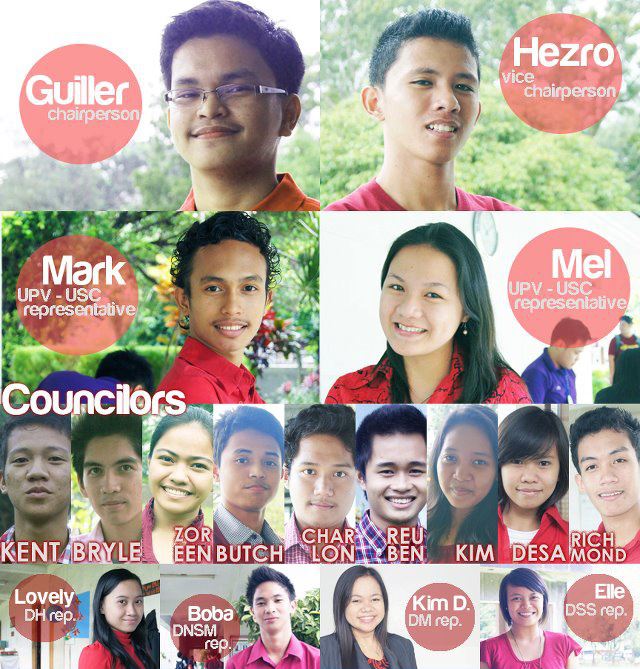
Next academic year will always be challenging as I will spearhead the UP Tacloban Student Council 2012-2013. All these challenges won't be surpassed without the collective efforts of the council and the students' population at large. I believe in the capacity of my Vice Chairperson Hezro Caandoy for being responsible for the issues in strengthening the body. The next academic year will also be challenging to the level of commitment of my new set of councilors, disregarding to which parties do they belong. Division Representatives must also live up to the expectations set by their co-divisions for it is only through this that the element of trust from the students will continuously live up. 

CONGRATULATIONS!


Sunday, January 29, 2012

Food Wars ( A Book Review)


This work of Walden Bello brings back again the line that connects the Global North and South. From his book explicitly entitled “Deglobalization” to his contribution in the “Another World is Possible”, Bello’s “Food Wars” continuously assert the spread of international movements countering the industrialization crafted by these “club of rich countries” at the expense of the lives from the Global South. This time is a focus for the farmers and peasants completely hurt by the current economic order.

The problem all started from the uncontrolled increases in the food prices that spread across the continents. This alarming situation triggered protests and hunger to many people especially those living in absolute poverty who cannot afford the minimum level of basic needs, most importantly the food. All these are traced in the neoliberal project that aims a corporate industrial agriculture.

The degradation of the agricultural sector that develops the underdevelopment of countries like the Philippines was then pointed out by the abandonment of the government through cutting its subsidies on agricultural sector which is exposed to the massive importation of goods that are relatively cheaper. Without the government’s assistance in the picture, products from the countryside lead to skyrocketing prices that makes the farmers aim for return from high costs. Thus, exposing to cheaper imported products such as rice from Thailand gives an unfair treatment to our domestic products. With the farmers hurt, the free-market is more than a typhoon that destroys the sector which was the backbone of the economy way back during Marcos period.

More than the government snubbing our exhausted farmers on the field, the production which was supposed to serve sustenance in the level of their community is distorted. If serving the community was the initial purpose, then lately it shifts to serve the interest of the developed countries by supplying demands for biofuel production instead of agricultural.

This type of production is extracted from the South. This specifically refers to ethanol and biodiesel; both are renewable and believed to combat climate change.  Ethanol is made from crops high in sugar or starch while biodiesel is produced from oils and fats. The latter is most commonly consumed in Europe. With a very high demand of agrofuel from the North, Brazil, the agrofuel superpower has to respond in parallel to the promise released in the World Trade Organization. Now, this starts the ironic situation. With the higher demands from the North and the greater supply from the South, Brazil, has to expand its sugar plantation for example, to the extent of hacking away its forests. These forests are supposed to absorb the carbon emission majorly produced by developed countries. In addition, South America, the second largest ethanol producer, comes to the extent of inevitably causing deforestation in the Amazon, losses biodiversity, and even resulting to slavelike working conditions. This is reality and this is the product of the false hopes created by the agrofuel production.

So this explains that in a decrease of supply, price increases. With the focus from agricultural channeled to biofuel, prices on goods continuous to soar high. However, two other main contentions explain this situation that directly devastates the lives of millions of people.

In relation to poor Africa, where countries are remnants of the colonial Europe, African government has failed to care farming. Given the low productivity in the country, New Green Revolution might ease its problem. This is through a genetic engineering based agriculture that is seen as necessary in the continent. However, with Europe’s ban on GMO, African feared that their exports will be barred from entering Europe. Again, unfair trade exists. The fact of the nondevelopment of agriculture in Africa also extends the low supply of food in Africa unable to keep up the demand of the continent.

Branded by the corporate world that peasants’ way of farming is obsolete and uncompetitive, a capitalist industrial agriculture has been a trend in the international economy. Not knowing this led the destabilization of our local industries through the opening up to the international market legitimizes the transformation of our local land, nature, and social relations when countryside is alienated- all these are effects that made responsible to the food crises.

Another very important example to understand in the era of skyrocketing prices is the diversion of Mexico’s corn to biofuels. 60% increase in the price of Mexico’s tortillas last 2007 was enough to stage thousands of protests. With the US Government subsidizing corn in Mexico for ethanol rather than for food consumption is the root of the problem. By then, an intriguing question arrive; How on Earth had Mexicans, who lived in the land where corn was first domesticated, become independent on imports of US corn in the first place? This is very crazy to understand but easy to answer when we come to think of the global agrifood system pushed by the World Trade Organization plus the transnational corporation taking advantage in all sides for profit maximization at the expense of the developing countries’ formation towards development.

The former concrete example is also not different to the food crises especially on the deficit of rice in the Philippines. How can we be currently a net rice importer, when we achieved a respectable degree of rice sufficiency in the late 1970s? Right now, we are regularly sourcing 1 to 2 million tons of annual rice requirement in the international market. So what really weakens our national economy? The answer- Structural Adjustment Programs.

If only SAP is a person, I see him as Osama Bin Laden intentionally killing the lives of many innocent people. SAP has been more than a terrorist that legitimizes its threats in the developing country through the mandate of the World Trade Organization and some other international financial organizations such as IMF and WB.

Shifting the attention to debt servicing from agriculture during Cory Aquino’s administration was nothing but suicide. With a weak local industry due to political crisis in the 70s and 80s, Aquino liberalized the market, cut off tariffs and quotas from imported goods, and left the agriculture to the hands of private entities thus creating a government who hands-off to the sector. This is the winning situation for the rich peasants and landlords which former president Cory is a part of. Also, cutting the quota, massive importation of rice follows which exacerbates the country’s fall behind Thailand and Vietnam. This even discourages the farmers and leaves the countryside to the cities which massive migration from the rural areas to the cities makes the government head aches. Now, with the emergence of new export industry specializing in high value added crops like cut flowers, asparagus, broccoli, and snow peas,- employment in the agriculture dropped.

Another major example of this global trending economic system is China. The capitalist development path for China is really a failure. Though, it did not feel the same level to Philippine’s experience since Chinese government had been so wise in gradually opening up its market while still holding many state-owned enterprises (SOE) at the same time.
            
Among the principle widely discussed and the realities explicitly uncovered, I strongly agree the current order that we are in. The food crisis that Walden Bello pointed out last 2009 was perhaps just 3 years ago, but the drastic increase in the prices of goods is definitely shocking for a three years period to almost double. This will mostly fit the example of oil prices.

As a resolution, I couldn’t agree more on the idea of deglobalization. Though this does not strictly mean a strict protectionist policy, but about still participating in the international economy that at the same time builds local economic capacity rather than destroying it; with a destroyed local industry, more protests and social unrest seeking for the right path to development is triggered. That is why, there is a need to respond these international movement forwarded by different farmers all over the globe.

It is so much disheartening to see more people self-immolating in a struggle for genuine reform in the system. These people die in vain without returning their land grabbed by powerful private entities, they died without witnessing the growth of their domestic market that upgrades the quality of life that their family must have experience. More than that, there’s nothing more to ask in living a society on the sphere of a democratic decision making and operating a market with the values of equity and justice. It is so much fun for an economy to be “reembedded” in the society, instead of having our society driven by the principles of the economy that will naturally hurt the people if left unregulated.

I personally hoped that all these propositions were gladly opened up in the World Economic Forum just this January in Davos. Planning among global business elite is expected to get realized in the next few months. This made me excited on how they will answer the problems resulted from the current order that they imposed on the past few years. Knowing that these elite people conceded the shortcomings of a market-free system, delegates in the said forum are forming a new model. System recovery is the biggest challenge for these delegates.

Witnessing their shortcomings already shed them light to realize that indeed there is a need for a change- a change that must be definitely different to their system of neoclassical counterrevolution that emphasizes market fundamentalism. I hope they will fulfill the theme “The Great Transformation”, that is, a transformation for the benefit of everyone. So long as they fulfill not just only advantageous to their private interest but also to the interest of the global world that will feel the convincing change, then a peaceful forum for them will take place in the next few years. No more naked protesters combatting the extreme coldness in Davos will happen. No more Igloos set as camps for Occupy Davos protesters will take place.

Bombarded by all these crises, future decisions must all be learned from these nightmare experiences. Most primarily, the strength of agriculture should not be left behind. The attention of the government for this sector is even worth since it is through our farmers that sustain the lives of the people who are supplied by food which is a basic need for everybody. If we pursue the kind of globalization that continues to shape the society in which we live today, social unrest will continuously rise and I believe that it will all the more consolidate to a more powerful movement that will sooner topple the world order created by the elites in the developed and developing countries. In this I am optimistic.


Major ideas credited to Walden Bello's "Food Wars". No one shall be held responsible for any errors of analysis.

Tuesday, January 17, 2012

Understanding a Development Miracle: China

If people anywhere would try to assess how China emerged as the world’s second largest economy, well, what’s obvious is the country’s export-oriented industry. Everybody in the Philippines will certainly agree that explanation. With the very large export surplus, we witness how every Chinese products are displayed on almost every Filipino stalls. This is just one of the efforts done by the Chinese in shaping the kind of development that the country is molding for many years.

It feels so interesting to understand how income per capita in China by 2008 was well over 5 times what it was in 1978. However, the increase might be as well embarrassing to know that China’s income per capita in comparison to some other countries is far behind. Just late last year, TIME Magazine had this issue comparing countries of big economies. Though Japan is behind China in the world ranking, the former leads a significant higher in income per capita compared to the latter. This low income per capita relative to other countries might explain why the country still has large number of poor people. Even if World Bank estimate that the number of poor in China is falling from 53% to just 8% in 2001, still, 8% is too many in a country who has 1.3 Billion population.

Moreover, if China hailed the benefits of markets, trade, and globalization, it is still very important to understand that the country had adopted activist industrial policies, meaning, less privatization which for me gave China the wisest decision that led to their advantage in the race for rapid growth. With the neoclassical counterrevolution theories (i.e. free market model) not doing well in Africa and Latin America, China’s own crafted development policies might as well be failure without their good performance in transitional institutions which is primarily their difference against Russia who immediately abolish its central planning institutions, not allowing to coexist both institutions.

With the European countries and Russia who aimed for a “big bang” in the changeover to a free-market economy, China opted to be different. They introduced new and transitional institutions that exist side by side with previous institutions of central planning for extended periods.  It was in this core reason that perhaps generates further miracle for the country.

Well, in the investment atmosphere, China is the most favored. It has an eventual market of more than 1.3 billion consumers that is more than enough to expound the pour of investments in the region.

A factor of being homogenous also matters. Ethnic diversity impedes economic growth which associates African slow pace of growth.

In the other part of the globe, whether the country is a developing or in a transition period, state-owned enterprises were sold off to private investors quickly. China is a different case. These enterprises still remained in the government’s hands, however this was contested with many problems that later on led to some of it privatized or even closed.

Another important thing to consider is also their focus on township and village enterprises. These are local government owned enterprises. Though these were privatized lately, it spread development to rural areas. It was a perfect choice for their country to have early reforms on agriculture in rural areas, then strategic for shifting it lately toward industry.

Upon looking China’s prosperity, there are some certain drawbacks that are might as well problems encountered by almost all other counties. Extreme poverty is one. Official land grab from peasants also losses the farmers security. Also important to note is their rising local taxes and minimal improvement in technology. The latter is more delicate for the country in the years to come. With the competing countries all over the world, China who mainly relies on labor-intensive approach may not come at par with high and sophisticated technologies of their economic rivals.

It is also a country who situates the most of the polluted cities in the world. This aggravates health problems among its people. Moreover, with its skyrocketing surplus that caters too many people around the globe, we cannot forget their publicized scandals concerning their safety on food, drugs, and others. A perfect example was their melamine tainted products on milk that led too many victims especially in the South East Asia. This created a threat to international public image on Chinese products added by lists of health hazardous exported materials.

To wrap up, China has made the wisest decision for its own boundary. With a gradual change in adjusting itself into the demands of globalization, they had found themselves in a win-win situation.

(This is a reaction to a case study in China published in Michael Todaro's Economics of Development 2011 Published Book)

Tuesday, January 10, 2012

"The Philippine Hidden Story"


What is primarily the talk of the town is the impeachment of Chief Justice Renato Corona. But there is a hidden talk, one that is gossiped by the people more than that of a town and this talk is always overshadowed by national issues embodied by the elites. These elites are basically the powerful minority that controls the power and decision-making in the policies of the government. This is all because the monopoly they occupy in the framework of the government that is supposed to be vacated for the masses. And who represent the pool of the repressed, vulnerable, and poor? None, so they really are the powerless majority.

The majority stays behind the elites. These people are shaped by the norms created through the powers of the elite that champion their trust. This is the meat of the talk that remains hidden after the said EDSA revolution. Following this process is the stage that institutionalizes the value of conformity to those who are in power. This is where my concessions arrive to Christian Monsod’s article on Christmas Day. It is put in emphasis that the priorities of the poor, the powerless majority are mishandled and most often neglected.

Being distracted from the core issues that our country must really face- from poverty, inequality, social services, etc., it is quite startling to comprehend that the current agenda set in the country is diverged from it.  We are more than interested to Kris Aquino's talks, live concerts of Korean's Super Junior, overestimating Adele's soothing voice, too much focus on impeachment of whoever seats the office, and so many more.  But there is nothing to get confused especially in the government scandals. It has already been noted that these people who are the stakeholders on these issues are just primarily the same faces who are choosing the options on the table on how the country come and go. So it is on their lives, on their issues that we are oriented to focus into.

I just therefore dismiss the idea of EDSA Revolution. Was it really a revolution? Or was it just an authentic revolution that just aimed to get the attention of the masses being blinded by the prime movers of that movement? Well, I think, it was the latter. It’s simply the restoration of the elites. Yes, our textbooks are right to show that the power of the poor are visible in the picture on that historical uprising in EDSA where they fought along with the promises branded on their foreheads. But it was not sustained. The masses are not the champions in that long way struggle. Had we truly won, concerns of the people who are on the mass absolute poverty must have been addressed. To refer Monsod’s article, “the government family income and expenditures survey (2009) showed that the incidence of poverty went down from 35.15 percent in 1988 to 26.49 percent in 2009, but the number of the poor increased from 21.3 million to 23.9 million.”. In this, poor are trapped to less than 1$ a day despite the skyrocketing prices in the market.

With the social reforms continuously unachieved despite the hopes of the majority, there has been a telltale issue on the challenges on whether or not the social reforms are really the interest of the powerful elites. The passage of distributing the land to the farmers in Hacienda Luisita was almost half a century struggle as started way back on 1960s. Just before 2011 ended, this battlecry of our sugar farmers were heard. The Supreme Court en banc 14-0 decided to finally give back the land to the farmers who are now probably the grandsons and granddaughters of those who were  squeezed by the might of the Cojuangcos’ in their call of land distribution. But this garnered a heavy emotion towards the ever prominent Kris Cojuangco Aquino, our President’s sister. We heard too much from her and I’ve read too much of her grief in her twitter account about the final decision of the court regarding the distribution of their vast land already spilled by those heroic farmers’ blood.

Finally, I agree to Monsod’s alternative in distinguishing to why Philippines is on its deep nightmare. Basically, the plans do not strike at the roots of the problem but only at the branches. Well, how one can know the where the root is if one don’t have the ability to listen the masses. This is why there is something very wrong about using power and wealth. This is an answer that primarily comes back again on my initial views- the pool of minority elites vested on selfish interests, planning for the country though their monopolistic opinions, championing the trust of the masses through institutionalizing the value of conformity from the majority powerless poor, and thus neglecting their concerns and diverging the central hidden issues to their issues based on their lives and interests.

Well, still, have a Happy New Year for the Philippines- with optimism. :)

(This is primarily a reaction to an opinion of Christian Monsod's article in Philippine Daily Inquirer, December 25, 2011 labeled as the 'Talk of the Town')

Thursday, December 22, 2011

“Another World is Possible” (A Book Review)

           “Another world is not just possible but is also essential…" These words are the battlecry of every people in the globe who seek for genuine democracy in international institutions that the oppressed majority have been dreaming of. What the present globalization offered us were nothing but developing the underdevelopment of countries at the periphery through these developed countries’ undemocratic decisions solely formed in crafting policies for the developing states. This however led towards crises that currently are in need of a treatment.

Edited by William Fisher and Thomas Ponniah, there exist specific alternatives to globalization convened at the World Social Forum in Porto Alegre in Brazil, a convention from the symbolic South. The book mainly expresses the conference proposals and synthesis that both articulate the rebellion against the neoliberal order and the desire to produce another world that is free of empires. All these are blended by the ‘network of networks’ composed of the old left, new social movements, and the newest wave of radicalism- or just mainly the global civil society. This precisely is a world engineered through a ‘globalization from below’ as a term parallel to Walden Bello’s ‘deglobalization’.

The core clash of these social movements is hinged throughout the effects of neoliberal policies. From the perpetuation of indebtedness to the stolen wealth and the culture of dependency- all these contribute the rooted sentiments against the developed North.  Even the problem of indebtedness lies in the history of colonialism! This puts forward the cancellation of debts to the ever-oppressed developing countries which is a bad idea for international financial institutions like IMF and World Bank.

Moreover, it has been a challenge for some time that these movements appear in two significant areas. First are the reformers that uphold the value of dialogue, negotiations, and partnerships. Change can come through reasonable discussion while the other one are the radicals which are total critics to the dysfunctional Bretton Woods/WTO and believe that the economy works better for the poor if there is check and balance not dominated by institutions. However, this divide is never a hindrance as to my views. So long as the anger, hatred, and fear envelopes the global civil society, the struggle remains constant. With the existence of these unjust institutions, social cohesion rises, thus, the movements will remain.

The principle of subsidiarity backs up these struggle where decisions does not have to be decided at the larger scale, then it let be decided at the smallest scale possible. Part I discusses the solidarity economy that which contribute a socially just globalization. The idea behind is to put the human being at the center of social and economic development. Preceding discussion emphasize the economics behind the movement which include the external debt, the call for reparation and extension of the scope of affirmative in Africa and Brazil, the alternative approach to international finance that has the economics in the service of humankind, reformation of WTO, forwarding corporate social responsibility, consolidation of representative voices of organized labor. One striking incite is the pressure on Argentina in climbing the ladders of development. In Todaro’s Development Economics published in 2011, Argentina despite the efforts of financial institutions in appropriating the structural adjustment programs, it is enveloped by negative growth rate, underwent a default in 2002 and the economy shrank 11%. This conditioned development primarily fell victim of the developed country where foreign investors buying high interest Argentine bonds with accounts in banks in the US and Europe.

One most important thing to understand is the nature of the opposition to the meeting in Davos for the World Economic Forum. This global political party in WSF at Porto Alegre against the Investors’ Protection Party in WEF is simply not the anti-globalizers as media would sensationalize it. Globalization is something that will continue and the concern is on the economics that serves the society, not the one that is served by society.

To boil down the specifics, further rights are highlighted, rights which are displaced in the order of globalization. Before, bureaucratic control and state dominated economies flourished not until the corporate rule in this modern world. Identities and contexts were moved from the national to the global. Heritage was all to disappear and destroyed. This is a fear that haunts one Filipino to identify himself amidst the trend on K-Pops, Hollywood dramas, nonsense and erotic songs from West, and many more.

Moreover is the transformation of public domain to privatization. Water, a common heritage for all are mismanaged resulting to inequality in access to it. A sustainable water management definitely requires the effective participation of local communities in decision-making process. On the other hand is the monopoly of knowledge by corporate interests or private profit shaped by the market of rich consumers. This expounds the rights over intellectual property which includes the patents, copyright, and trademarks- the first problem is this rule of granting patent holders to the members of WTO. The second problem is the impact which specifically explains the high prices on HIV/AIDS medicines which limits the ability of developing countries to meet basic human rights to health.

What is also striking to remember is the patent right as a recent development. We can remember how US took over British technology without any problem and without paying for it. In 20th century is the emergence of Japan that copied freely the western technologies. But in the 21st century, developing countries are hold back from developing its knowledge on improving high technology. This is an important thing to ponder on. What my Microeconomics taught me is the argument on protecting intellectual property through patents is the need to reward innovation. It is based on the assumption that inventing new is something to be encouraged. However reality speaks that the result is painful. We can also imagine our commendable farmers on the field introduced by sterile seeds by corporate seed manufacturers thus prohibit them on reusing their own seeds. This is a way to the monopoly over the reproduction of TNCs in the agricultural products. This however fuels the alternative to the rights of farmers and rural communities to ownerships, rejection of the monopolistic appropriation of knowledge, and therefore the increase in the public funding for research and innovation for social and economic development.

Lack of investment in research and development of medicine to treat neglected diseases which are mainly diseases of developing countries is a problem at status quo. This might probably supply the idea that diseases of the ‘rich’ are highly profitable thus crowded by profit driven character researchers influenced by neoliberal perspectives while in-need treatments for the developing countries is continually neglected.

With neoliberal policies, heavy subsidies for export agriculture and fishing are maintained with absolutely no protection for small- and medium-sized producers who produce mainly for the domestic market. On the other side of the story, access to food should not be viewed as a form of assistance.  It is indisputably a right that everybody needs to have. For this reason, USA using food as a weapon of economic and political pressure against countries like Cuba is definitely inhumane.

Another city is possible. Right now, urban population is denied the right to housing, essential services, employment in reasonable condition, etc. it is essential to deconstruct the ideology of the single-minded city that aspires for more supportive, more democratic, and more sustainable in response to social demands. Lastly, the indigenous people who are marked by domination, social exclusion, intolerance, wars, and destruction of nature, violence, and threat of extinction must be protected. They are vulnerable to projects imposed on them, introduction of construction sites and making decision without them on the table of decision-making. What is important is the idea on the “Unity in Diversity” among IPs. Indigenous territory can be inherited, but never sold or mortgaged. This is the weapon of the IPs in forwarding their calls and sentiments. Defending their rights as collectives is their armor.

In the light of the age of information, what is concentrated among the media is their high profitability over and above the public interest. The sad story for media is being forcefully swept away of being in a public character, privatizing most and forcing the rest to become commercialized. The danger is indeed on the dictatorship of the market that it has enormous power to win peoples’ ‘minds and hearts’. The exaggerated news on movements is irritating and the sensationalized publicity on neoliberal projects are attracting. Before when CNN flashes the World Economic Forum in Davos, an inspiring message will registered into my mind thinking of being one of those participants along intimidating conferences with the good-looking people all around the globe.

Furthermore, one right to push through is for the education to be not treated as a commodity. This is a problem deeply felt by the youths actively acting against neoliberalism. Thus, with the youths in the picture, the movement coming from all the different sectors of the society remains solid and alive.

In the context of violence, some argues that war on terrorism is justified just because of the 9/11 attacks of the terrorists. However, the excuse of using 9/11 nightmare propagates US in legitimizing the use of weapons for wars. Talk about how they tried to pulverized the Talibans in Afghanistan who abuses women. However, which is more abusive is the US bombing in the Afghanistan which results to the rise on the number of women victimized by the armed conflicts initiated by the US. These are women who are victims of discrimination and intolerance.

Finally, what is essentially presented is the international architecture of power which Walden Bello calls it ‘deglobalization’. It is all about getting rid of being dependent to the North, income redistribution and land redistribution, de-emphasizing growth, democratic economic decisions, new production and exchange, and the principle of subsidiarity.

With the another world that dismantles the present hierarchical system of domination, there rise a threat to cultural imperialism. This is something beyond to my expectation because anyway, what is a must to focus is this current illness in the global order that in need of a special treatment started by the World Social Forum in Porto Alegre.

Sunday, December 11, 2011

Haunted by Joel Lamangan's "Sigwa"


           “I totally admire the youths of 1970s!”  This immediately registered to my mind after watching the internationally acclaimed movie Sigwa by brilliant Joel Lamangan. Staging the culmination of “End on Impunity” week-long event, I think that last Saturday afternoon was indeed a full blast, seriously awakening.

            The movie loaded with flashbacks gave the feeling of putting oneself back to the first quarter storm. It also relates the audience that being a student confronting with social issues at present cannot be just different to what students before experienced. However, there is a thick line that distinguishes my generation’s reaction compared to what our parent’s generation of being students back in 70s.  I felt that they were more active. I felt that they were more united and dedicated.

            I love the idea that the movie explains us the truth on why people resort to activism. Simply on what is the rationale behind why the characters, specially the youth engage in underground movements. They aren’t to be blame for all the activities they have done before, from marching on the streets, from holding placards, from resisting the police’ forces, etc. I personally hail them for all of these. I feel the anger that squeezed their hearts. I saw their tears that trickles down to their cheeks. I feel for their struggle.

            With the crowd of people who intensely watched the movie, I think we are all in common feeling that drives us to realize that in the end, being an activist is the best for those who have the courageous hearts. I admired these people for having deeply rooted sentiments in them against inequalities. Well, I have been into this stage but no time for me to be a radical. Rallies from the panting leadership of Gloria to the spring of Noynoy’s presidency made up my college life. I know that the intensity of my experience were incomparable to what Pauleen Luna, Marvin Agustin, Megan Young, Lovi Poe, etc. did in the movie, but I know that the feeling in forwarding the struggle is the same.

            There were some disappointments in the progress of the story. When they were all fragmented and their circle of friends was dismantled, I think that they were all innocent of it, not until Marvin Agustin-turned-Tirso Crus III’s rise into political power. His role of being a traitor to his comrades signals how activists turned to be pliant like a bamboo when situation calls for a matter of death. On the other hand, I have a high regard for Pauleen Luna-turned-Zsa Zsa Padilla in continuing the struggle in the country side. She was a fierce woman with nationalist and scientific principles embedded in her personality.

            After all, I hope that the story behind the movie will put a tingling sensation down to our spine with a realization that it is the masses that go along with our struggle. I love the idea of “social practice” taught to the main characters by their professor. Thus, the vehicle towards the courage is to feel the masses and to seek for a better future for the greater good.  

Lastly, the movie is composed of few words, “Serve the People!”